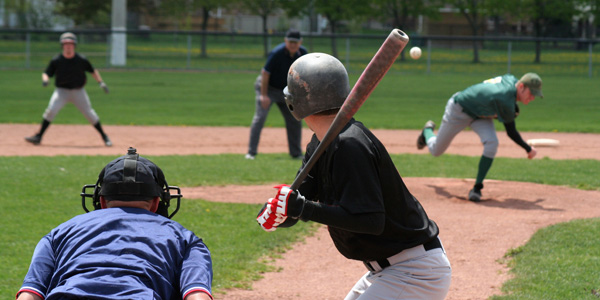
What happens after a sports psychology coaching session?
What are the next steps athletes take after a session or between sessions? Many athletes we know have misconceptions about sport psychology coaching or working with a mental game expert. One big misunderstanding is that athletes are fixed after talking to a mental coach or sports psychologist and are free to perform their best.
Athletes can obtain immediate improvement after a sport psychology coaching session, but the real work is done outside of the actual mental training sessions. In a session, athletes learn to identify mental game challenges that hold them back. They also learn about mental strategies that can help them improve their performance and consistency.
Most athletes and parents do not realize that sports psychology coaching is an educational process and NOT a remedy or quick fix for problems. We like to think of our coaching as education and not therapy. For this reason, we prefer to help athletes over months and years, not weeks or one-shot sessions.
If most of the progress or improvement is made outside the actual sports psychology session, then what happens after a session? We usually ask athletes to take what they have learned, such as a refocusing strategy, and apply it to practice and later to competition. Education is the first step in sport psychology coaching. The next step is practice—taking what you learn and using it in practice.
Old habits are hard to break and this holds true for your mental game as well. It takes patience and dedication to improve you mental game, the same process when you change your technique. Here’s an example of a lesson we teach in sports psychology. If you commonly allow distractions to run unchecked in your mind, then these distractions become normal for you. Learning how to refocus can help you regain concentration quicker by learning to recognize the distraction, stop it, and refocus on the task at hand. The key is to practice your refocusing until it becomes the dominant habit during training. Thus, breaking the old habit of allowing distractions to run unchecked.
After a sports psychology session, we also provide athletes with out Mental Edge Workbooks so they can learn between sessions. This way you are working on mental skills between sessions. We do not want you to rely only on the time spent with a sports psychology professional. We found this helps to accelerate the coaching process and to help athletes come more prepared to the coaching session.
In addition to giving you sports psychology exercises to do between each session, we often ask you to record or track something we work on in the sports psychology sessions. For example, we might ask you to record the number of times you became distracted during practice or competition and how this affected your performance. In sport psychology, we call this an awareness exercise because you learn to become more aware of the things we want to change. Psychology professionals would call this self-monitoring your thinking or performance.
Thus, I hope you see that most learning and changes take place after a sports psychology session. This is when you want to apply what you learn to practice and competition so you can make lasting changes in your mental game and improve your performance.
Mental Performance Coach Dr. Patrick Cohn has helped athletes for over 40 years enhance their performance. Dr. Cohn earned a master's degree in sports psychology from CSUF and a Ph.D. from the University of Virginia, specializing in Applied Sports Psychology. Today, he is the president and founder of Peak Performance Sports, LLC in Orlando, Florida. He's working with Olympic athletes, NFL, NHL, MLB, and professional motocross racers and NASCAR racers.
Used by Google Analytics to determine which links on a page are being clicked
30 seconds
_ga_
ID used to identify users
2 years
_gid
ID used to identify users for 24 hours after last activity
24 hours
_gat
Used to monitor number of Google Analytics server requests when using Google Tag Manager
1 minute
_gac_
Contains information related to marketing campaigns of the user. These are shared with Google AdWords / Google Ads when the Google Ads and Google Analytics accounts are linked together.
90 days
__utma
ID used to identify users and sessions
2 years after last activity
__utmt
Used to monitor number of Google Analytics server requests
10 minutes
__utmb
Used to distinguish new sessions and visits. This cookie is set when the GA.js javascript library is loaded and there is no existing __utmb cookie. The cookie is updated every time data is sent to the Google Analytics server.
30 minutes after last activity
__utmc
Used only with old Urchin versions of Google Analytics and not with GA.js. Was used to distinguish between new sessions and visits at the end of a session.
End of session (browser)
__utmz
Contains information about the traffic source or campaign that directed user to the website. The cookie is set when the GA.js javascript is loaded and updated when data is sent to the Google Anaytics server
6 months after last activity
__utmv
Contains custom information set by the web developer via the _setCustomVar method in Google Analytics. This cookie is updated every time new data is sent to the Google Analytics server.
2 years after last activity
__utmx
Used to determine whether a user is included in an A / B or Multivariate test.